
So That...
As a borderline millennial, I am in the unique position of seeing the humor in some of the crazy things millennials do and also the crazy side of what some of the older generations accuse the millennial of. One of my personal favorites are companies blaming millennials for killing the fabric softener and laundry detergent industry. One large company even said that millennials don’t know what fabric softener is used for and so that’s why they don’t buy it. Here’s a bit of a confession, I don’t really know what fabric softener is used for, so they weren’t completely wrong. But, if I were going to take a wild guess, I would say that it softens fabrics. I’m aware it probably does much more than that. I would assume it also conditions the fibers of your clothes, helps them to last longer, and because of the “softening” makes them more comfortable to wear. Confession #2- I have never bought fabric softener in my adult life. When I have used it, I can tell that the towels seem to be a bit more fluffy but that’s about it. And because having fluffy towels is low on my priority list, I (like most millennials) choose not to spend extra money on fabric softener. Millennials also are more likely to wear clothes more often between washing. This can potentially sound way more gross than it is, but according to cleaninginstitute.org you can wear a pair of jeans three times before you need to wash them.
In short, millennials aren’t against people using fabric softener or washing their clothes after every individual use, they just have a different expectation of how much money it should cost to wear clean clothes. It can get all sorts of confusing. There are some who have very different definitions of clean, there are some who make their own laundry detergent in 5 gallon buckets for less than $20 a year, and then there are some who are actually against the chemicals in some laundry detergent products. It’s not like millennials planned to take out an industry or to change expectations, but many of them came to the same conclusion for a variety of different reasons.
Why is any of this important? Well, it’s not. At least talking about fabric softener isn’t really that important (unless you’re in the fabric softener business). But what is important is that for all of their quirks, millennial are at least good at asking “Why?”. Why are we spending tens of thousands of dollars on a college education that no longer provides the job opportunities that it did 10 years ago? Why haven’t wages gone up proportionately with the cost of living? Why are kids eating tide pods? Asking why is extremely important.
Almost as important is the phrase “So that…” For every “Why” there should be a “So that”. Why do you brush your teeth? So that my teeth are clean, healthy, and more importantly so that they don’t fall out. Why do we have a thrift store as one of the ministries at our church? So that we can have money to pour back into our community, helping meet their financial needs and point them back towards Jesus. Hopefully you can see the pattern by now. For everything we do at the church, someone is eventually going to ask us why we do that. Why do we eat bread and grape juice once a month? Why are we doing a fall festival on Oct. 28th? Why do you need Jesus? These aren’t just trivial questions, there is a lot of complexity, depth, and beauty in them. There is a reason why we do everything we do, and ultimately that reason is so that we can be better followers of Jesus. But sometimes you have to work to get there. Sometimes you have to ask a lot of whys and get through a lot of so thats, but the important part is that you are thinking about it.

The Last Straw
I would never have thought that something that weighs one sixty-seventh of an ounce would cause so much hatred. If you’re like me, ounces are already confusing (why are there 16 in a pound, it makes no sense. And don’t even get me started on why fluid ounces are completely different). Then you throw in a horrible fraction on top of that, and it’s hard even to quantify what it means. For the record, it means that it’s 1/1072 of a pound, or in other words, you would need 1072 straws to make one pound. That’s right. I’m talking about straws.
You’ve probably seen in the news or on Facebook that several cities and companies are moving away from the plastic straw. What was meant to be a small step towards protecting the planet and especially ocean life has turned into a huge debate. Here are some of the facts that have emerged.
There are roughly 7.5 million plastic straws around America’s shoreline.
There can are up to 8.3 billion plastic straws on the entire world's coastlines.
There are nearly 9 million tons of plastic trash that ends up in the ocean each year.
By piece, straws make up only 4% of the plastic waste produced.
By weight, they make up only 2,000 tons of the 9 million tons of plastic waste each year.(Source)
If you were to do a little bit of math, you could figure out that American straws account for less than 0.1% of the straws in the oceans, and 0.00000022% of the total weight of plastic in the ocean. If you are pro straw, those are some good numbers for you. So basically, the argument has become something along the lines of side A saying “American’s throw 7.5 million straws into the ocean each year, we should do something about it” and side B saying “That’s only 0.00000022% of the plastic waste, it’s not a big deal”.
Straw debates might also include something about money or people needing them. Plastic straws are super cheap, usually about half a cent. A paper straw is five times as expensive at two and a half cents. So yes, your straw budget would go up five times, but in the grand scheme of things, it’s still cheap (and yes I just used the same argument from above about percentage wise it’s not a big deal). And it's true that kids and some people with particular disabilities need straws to drink. Paper straws meet that need, but even if there were no straws provided, you can purchase metal or reusable silicone straws from Amazon for less than a dollar a piece and bring them with you.
I struggled with deciding where to go from here. I thought about the old story about a girl throwing starfish back into the ocean (the bottom line is even though she can’t save them all it makes a difference for the ones she can save), I thought about rehashing the “what would Jesus do” thing that I kind of covered in this blog post from a few months ago. However, I think I need to talk about buts for now.
At its core, this issue is about whether or not using plastic straws is the best thing for our planet. There is no way to say that it is. Everything that follows that simple question becomes a “but.” BUT paper straws taste gross (they do taste different). BUT people with disabilities need them. BUT plastic straws are the cheapest. BUT I like my straws. BUT they don’t even make up a significant percentage of the ocean plastic waste. All of those things might be true, but it doesn’t change the fact that plastic straws aren’t good for the sea turtles in the wild.
This principle applies to so many other aspects of life that matter more than a piece of plastic that’s .42 grams (see how much easier metric is). Here’s some simple questions for you. Is spending time with your kids more important than spending time on your cell phone? Are we supposed to love our neighbors? Should we spend time with God? The answer to all of those is yes. When it becomes that simple, it’s like a punch in the gut when you want to add on a “but” to justify playing candy crush instead of playing with your kid. Or trying to explain why an extra 10 minutes of sleep is more important than praying to God. When life gets complicated, make it simpler by asking the fundamental questions. You still might not find the answer you’re looking for, but you’ll find something along the way.

Model for Faith
On August 13, 2004, at 10:15 p.m. my wife and I and our dog Penny were covered up with a mattress in the center closet of our house as we hunkered down as hurricane Charlie bared down on our neighborhood. At 2:30 a.m. we walked out of the house to be overwhelmed by the smell of fresh cut wood.
Twelve oak trees were on the ground along our neighborhood. When daylight came, we surveyed the neighborhood, and a tornado had torn the clay tiles off of our neighbor's house ten houses away and slung them into homes next to it. All of the people in the neighborhood came together, and we had the road cleared in a few hours so we could get out. Although we were out of power for eight days in the heat of August, we all helped one another.
The sad thing was when everything got back to “normal” we tend to go back to our cocoons. When our backs are against the wall, we look to other people for help. The goodness of people shines best when our backs are against the wall.
During the past two months, I have witnessed the grip of cancer on my mother. On July 12th cancer took her. However, The cross has the final say. I have witnesses glimpse’s of heaven as she spoke to us.
“Do not let your hearts be troubled. Trust in God; Trust also in me. In my Fathers house are many rooms; if it were not so, I would have told you. I am going there to prepare a place for you. And if I go and prepare a place for you, I will come back and take you to be with me that you also may be where I am. You know the way to the place where I am going.”
Certainly, I am not the first to lose a parent, but it does not mean there is not grief. The disciple’s grief was turned to joy in John chapter 16. Jesus is trying to explain to the disciples he will no longer be with them. Jesus explains even at birth the mother goes through unbearable pain, but she forgets the anguish when her baby is born it turns to joy. During the whole conversation with the disciples, Jesus says with astonishment “You believe at last.” Here are the disciples who have seen miracles, eaten, prayed, and traveled with Jesus. And now they finally believed.
Later in John’s gospel Thomas (doubting Thomas), Thomas says “Until I see the nail marks in his hands and put my finger where the nails were, and put my hand in his side, I will not believe it.” And a week later Jesus appears to Thomas and tells him to put his fingers here and reach out your hand and put it to my side. STOP DOUBTING AND BELIEVE.
Then Jesus says, “Because you have seen me, you have believed, blessed are those who have not seen and yet have believed.”
Our hope and faith are in Jesus Christ and his promises.
“We live by faith, not by sight”
In our worse time when we are mad at God and when we question his ways, and it is difficult to have faith. Patience is the hardest virtue, but if we can look back on how God has worked in our lives, it is easier to have faith.
“Now faith is being sure of what we hope for and certain of what we do not see”
I do know in the past few months I have a closer relationship with my sister, I know that would have made my mom happy. We are keeping a close eye on my dad who is adjusting to a new reality after being married 67 years. Through it, all faith has led us through hard times and loss. We will find joy. My mom said to each of us “When I pass to go ahead and morn for a week, then after that get on with your life.”
She was my perfect model for Faith.
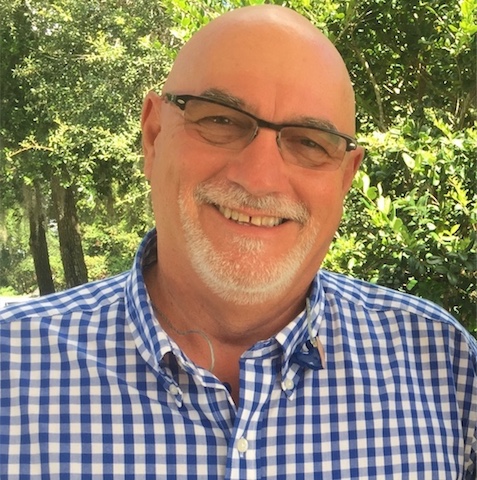
Mike Conrad serves as our Worship Director. When he's not preparing for worship or playing an instrument, he enjoys spending time with his wife boating and fishing. Learn more about Mike here.
Disappointing Heroes
Last Tuesday, Major League Baseball had its All-Star game. Normally, if you aren’t a baseball fan, that means nothing to you. But while Josh Hader was having a less than stellar night on the mound giving up four hits, three runs, and walking away with a 27.00 ERA after getting only one out, someone did some deep digging on his twitter page. When he was 17 Hader made several racist and homophobic tweets, and in the middle of the game thousands of people suddenly knew all about them. His parents were given new jerseys to wear that didn’t have Hader’s name on them so that they could avoid abuse from fellow baseball fans.
Last week also saw James Gunn, writer and director of Guardians of the Galaxy Vol. 1 and 2 fired for offensive tweets made nearly a decade ago. A few months ago, Roseanne Barr had her entire show canceled because of a racist tweet. All of this, and so much more, has happened since the #metoo movement started back in October of last year. Weirdly, Twitter has ended careers and brought awareness to sexual abuse in a way that no other social media platform has done.
The most obvious thing to say is “be careful with what you put on social media.” But it’s surprising that this is still a conversation that we have to have. Even more surprising is that it’s a conversation that needs to be had with adults, maybe more so than kids. A phrase I have to repeat often is “I will not argue with strangers on the internet,” usually after I just argued with a stranger on the internet. But there is a deeper issue that all of this brings up. What do we do about the movies, sports, or other materials that are now tainted by knowing the dark personal history of someone involved?
Do I boycott all the Marvel movies because they hired a director who had nasty tweets a decade before they hired him? Maybe just the Guardians movies? Could I still cheer on the Brewers if I lived in Milwaukee knowing that one of their relief pitchers had racist tweets from his teenage years?
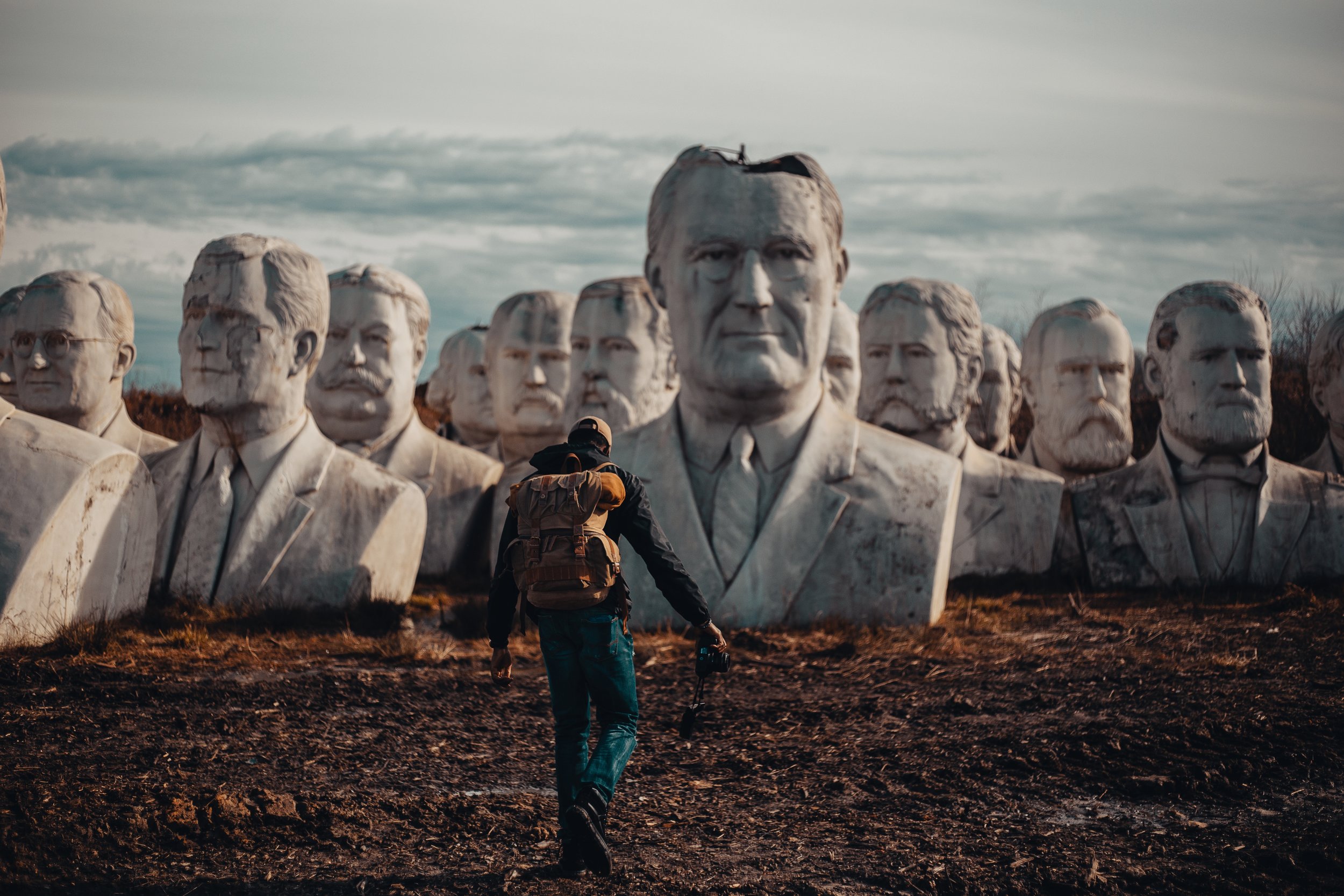
Those cases are where one member of a much larger organization had issues surface. Hader is one of a dozen pitchers on his team, and Gunn was one of hundreds of people involved in the making of the GotG movies. But then there’s the case of John Howard Yoder. He was the author of the book “The Politics of Jesus” which was one of my college textbooks and is one of the books that I recommend to most people who are trying to figure out how Christians should interact with the world and politics. However, I recently found out that Yoder had a history of sexual abuse. What do I do with his book now? Can I in good conscience recommend a book about Jesus that was written by a guy who’s lifestyle didn’t reflect what I read in his book?
And then there are people like Bill Hybels, who over the past 40 years has provided leadership and direction for hundreds of churches beyond Willow Creek, and seen tens of thousands of people commit their lives to Christ. What do we do with his resources and models?
Part of what makes this issue so cloudy is that in the church we read books written by murderers and misogamists (among other less than kind descriptors) all the time. Half of our New Testament was written by Paul who murdered Christians before becoming one himself. The core of the Old Testament, the Pentateuch (Genesis, Exodus, Leviticus, Numbers, and Deuteronomy), is traditionally believed to have been written by Moses, who among other things, murdered an Egyptian before fleeing the country. No one is suggesting we discard those sections of the Bible that were written by people with less than perfect pasts. So why does wrestling with Hybel’s and Yoder’s indiscretions feel so different?
Some of it is time and tradition, the books of the Bible have been pretty much unchanged for 1700 years or so. Some of it is we can see the redemptive works of God through the authors. Sure, Saul (later to be known as Paul) killed Christians, but he also had his life radically changed by God and he became one of the biggest people in Christian history while fully admitting he wasn't perfect.
Some of it is supply and demand. There aren’t a lot of other books written by first century Christians who knew Jesus personally. But there are hundreds of books written on theology, church leadership, and politics of Jesus. So while Hybel’s and Yoder’s might be among the best, they aren’t the only ones saying these things.
But I think all of this is missing the point, or at least not addressing it directly. We don’t read books written by Moses, Paul, or even Hybels because of who they are and what they can tell us. We read them because of how God revealed himself through their writings. It’s God that we are drawn to, not the person who wrote down the words. When we look to people as our role models or inspiration, we’re bound to be disappointed, hopefully not by huge scandals, but in some way they will fall short of the glory of God. Maybe this doesn’t help you wrestle with if you should or shouldn’t read anything written by someone who’s had an affair, maybe you had no idea and I’ve just created another dilemma for you (sorry). So to quote one of the murderers who wrote the Bible,
““Do not deceive yourselves. If any of you think you are wise by the standards of this age, you should become “fools” so that you may become wise. For the wisdom of this world is foolishness in God’s sight. As it is written: “He catches the wise in their craftiness”; and again,The Lord knows that the thoughts of the wise are futile.” So then, no more boasting about human leaders! All things are yours, whether Paul or Apollos or Cephas or the world or life or death or the present or the future—all are yours, and you are of Christ, and Christ is of God.”


Being Thankful
Too many times we wake up in the morning sleeping as late as we can and try to do all the things we need to do and get to work on time. Most mornings are a blur. I had a friend who would sit down every morning at 5:00a and read, write, listen to the birds or take in the morning air. That was his time to give thanks. It prepared him for the day ahead. To be honest, I wish I had that kind of discipline. I do not, I do, however, turn off the radio and have a conversation with God on my way to work. I am thankful for the day before me with all of the obstacles that come my way. I always ask for God’s help. He is a God of details.
Steve Jobs the founder of Apple will be known for many inventions and many products we use daily. And the wealth, which he accumulated, is beyond what we can ever imagine. However, he had these words to say in his last days...
“In my lifetime, the wealth I have won, I cannot bring with me. What I can bring is only the memories precipitated by love. That’s the true riches which will follow you, accompany you, giving you strength and light to go on. Treasure Love for your family, love for your spouse, love for your friends. Treat yourself well. Cherish others.”
Why do we get so carried away and wrapped up in our lives that we miss the moments in our lives that could have counted if we just took the time? Be thankful, greet each day as a gift and thank God for the day. Keep Him close by all day, and He will guide you.
Many of you have been praying for my family with the illness of my mother. We thank you for all the prayers. This time in any family situation is always difficult, and many significant decisions need to be made. I was at home with my family last week, and I went in the pantry, and these were the words taped up to the inside of the door. Lord if you bless me, I’ll thank you. But if you don’t, I’ll be thankful for what I have.

It should not be asking too much for us to slow down and just be thankful.
“Give thanks in all circumstances; for this is God’s will for you in Christ Jesus.”
Be thankful and God Bless!
Mike

Mike Conrad serves as our Worship Director. When he's not preparing for worship or playing an instrument, he enjoys spending time with his wife boating and fishing. Learn more about Mike here.