
Equality of Women in the UMC
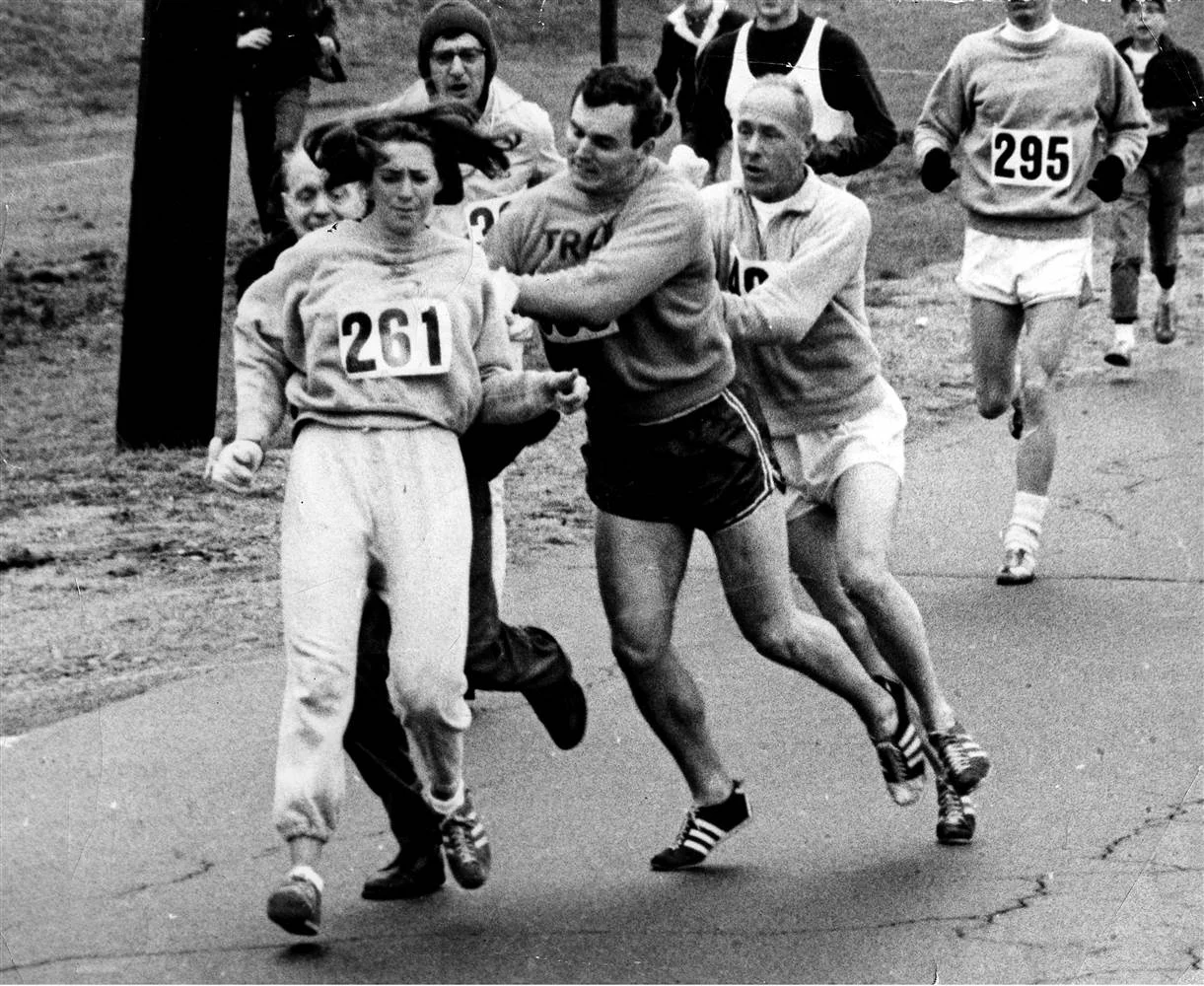
One of the things to come out of Annual Conference this year was the “Resolution Concerning the Equality of Women”. You can find the full resolution HERE, but this is an excerpt of what it says,
“[We] affirm that both women and men are created in the image of God and are of equal worth, we affirm the ordination of women, we affirm open itinerancy, and affirm the equality and calling of women both in our own region and throughout the world.”
This comes shortly after the Alabama West Florida Conference was one of the few conferences to vote no to Amendment I from the last General conference. (For the non-methodist people who stumble upon this blog, annual conference is a yearly gathering of local churches that is almost like state governments creating laws and bills and reporting. General Conference is the national scale, similar to the US senate.)
While there is one sentence about the gender of God that likely inhibited the amendment from passing, both were about gender equality and affirming that women belong in ministry and are of equal value in the eye of God.
The fact that the AWF conference passed this resolution, as well as general conference proposing Amendment I, brings a whole bag of mixed emotions for me. I am thrilled that the resolution passed, I wish the amendment would have passed as well but I understand some of the reservations that people have expressed. But it saddens me that we even have to create these amendments and resolutions in the first place.
The United Methodist Church has ordained women for over half a century, which is more than some denominations but not as long as others. But if you ask some of our female pastors if they have ever felt like they have been discriminated against because of their gender I’d imagine every single one of them would say yes. At my last church, our associate pastor wasn’t even allowed to speak from the pulpit at a community gathering because she was a girl. In college, the best student we had in the theology and ministry department was a girl from a baptist church who felt called by God but had no place to go in her own denomination because of her gender.
So much of this discrimination of women in ministry comes from three passages found in the New Testament.
Titus 1:6 If anyone is above reproach, the husband of one wife, and his children are believers and not open to the charge of debauchery or insubordination.
1 Corinthians 14:34-35 Women should remain silent in the churches. They are not allowed to speak, but must be in submission, as the law says. If they want to inquire about something, they should ask their own husbands at home; for it is disgraceful for a woman to speak in the church.
1 Timothy 2:11-15 Women should learn quietly and submissively. I do not let women teach men or have authority over them. Let them listen quietly. For God made Adam first, and afterward he made Eve. And it was not Adam who was deceived by Satan. The woman was deceived, and sin was the result. But women will be saved through childbearing, assuming they continue to live in faith, love, holiness, and modesty.
It is easy to see why someone would point to these scriptures and come to the conclusion that women aren’t qualified to be pastors or to preach. However, the Bible has a whole lot more to say about women in churches than just these three verses. And even these three verses don’t necessarily mean what we see on the surface in the English language.
I should begin by saying that all three of these passages were written by Paul. He also wrote in Ephesians 4 that “Christ himself gave the apostles, the prophets, the evangelists, the pastors and teachers, to equip his people for works of service”. It is odd to me then to try to limit these “positions” to only men when Paul himself made mention of women in each of these positions. Junia was one of the apostles mentioned by Paul in Romans 16:7. Philip had four daughters who were prophets (Acts 21:9). Euodia and Syntyche (Philippians 4:2-3), Phoebe and Priscilla (Romans 16:1-5), Nympha (Colossians 4:15), and Chloe (1 Corinthians 1:11) are all mentioned by Paul as well to be important leaders in churches.
I know there are some scholars who say that we can’t prove that these women were actual pastors or THE leader of a church, and while being exegetically easy isn’t a guarantee that it’s correct, it’s easier to say that these women were indeed church leaders and that Paul meant something very different in the three verses above than how we read them in American English. We can even come up with very easy and sensible things that we think he meant in those verses. But for far too many women, especially outside of our denomination, they still have to fight just for a seat at the table. They have to not only preach as good as a man, but do so while making sure they look nice but not attractive (because it might be distracting to men if a good looking women is in front of them), they have to be friendly and personable but can’t show emotion because it will make them look weak, be firm and confident but not be a word I can’t say in a church blog. I could go on and on about how we judge women on a completely different scale than we do men, but I think you get the idea.
And it’s for all of these reasons and more that even though we’ve been under the impression that men and women have been treated equally we still felt the need to make an official statement about it. Because even though some of us feel like we are there, we haven’t arrived yet. We are far from being equal, and now our conference has made a resolution to protect the dignity of all people made in God’s image. But a resolution means nothing unless people actually follow what it says.


Einstein and Barth
I’m currently reading “Astrophysics For People In A Hurry” because I’m a nerd and I’ve always been fascinated by physics. The chapter I read last night was about Einstein's biggest blunder, the cosmological constant, which it turns out actually is still useful, just not for the reasons Einstein thought when he developed it. This chapter has one seemingly small distinction woven through it, the difference between theoretical physics and experimental physics. Einstein did most of his greatest work inside his own head. At the time there were no machines or tests to prove that his theory of relativity was right or to prove if the universe was expanding, stable, or being forced together by gravity.
So what Einstein did was he imagined how the universe would react and respond within certain scenarios. This puts him in the theoretical camp. The other camp is experimental physics. This is where scientists actually try to set up experiments and see if theories are right. If they confirm the theory, they try to get repeatable results. If something comes out different than expected, they try to figure out why it’s different. Essentially, one says this is the way we think the world works, and the other says this is the way the world actually works. They aren’t competing groups, they all work for the same purpose, and they actually need each other.
If you take away all the science language, you get a concept that is everywhere in our world, especially in Christianity. There are those people who love to sit in a room and think about what the kingdom of God looks like and try to discover the true heart of God (i.e. the dessert fathers and monasticism).Then there are those who are actually neck deep in the kingdom and living out the Christian life. It would be a bit like comparing Karl Barth, who wrote mountains of pages in systematic theology, and Mother Theresa who lived the majority of her life living among lepers in Calcutta.
There is certainly a case for saying that as christians, we should spend our time doing both. We should spend time thinking about who God is and how his revelation through Jesus should change the world. We also need to spend time actually trying to live out those conclusions and actively love God and love others. My guess would be that the majority of us fall into one camp, or default mode, than the other. Perhaps we find it incredibly helpful to sit with a close group of friends and talk about the difference between transubstantiation, consubstantiation, and symbolism and how each view presents God in a different way that might send echos through the rest of your formed theology. Perhaps you find that idea awful and would rather just walk around and have people participate in communion in their homes and on the streets. Both are acceptable, yet without each other it would end up either just talking without any action or we give bread and juice to people with no meaning.
It’s this codependency that reminds me of the early church leaders Paul and James. Paul tends to talk about salvation in terms of your faith, or believing, while James said that faith without works is dead. They aren’t contradicting each other, they are merely broadening what it means to actually be a follower of Christ. We aren’t saved by our works, but if we truly believe than we will want to do something about it. So read through the book of Romans, then read the book of James, think about it, then go do something.

Distractions
There is a town near Daytona Beach called Port Orange, and when you go down the main street, you would never know there are large companies and businesses all around. The city mandates you can only have signs at a certain height, and there must be a tree buriers between the road and the industry. There are a couple of reasons they have put this in place, one to continue the beauty of the city and two eliminate distractions.
Driving down highway 98, 90 or I-10 everywhere you look something, or someone is trying to get your attention. You pull into a gas station, and the first thing that happens the TV screen on the pump starts advertising for Mountain Dew and telling me I could sure use a candy bar or a snack. You look anything up on, and before you can see anything, there is an Ad you can watch or skip in 5-4-3-2-1. Facebook, Msn, Yahoo is the same way. One thing that aggravates me is when you are watching your favorite TV program, and it goes to commercial the sound gets 30% louder to make sure you are paying attention. Hate that. I understand this is the world we live in, and I love technology, but there is a time and place.
It’s hard to believe that just 25 years ago Google was not a thing. To travel there was a thing called “roadmaps” which got you to your destination. Cell phones were beginning, and mostly the rich could afford them, and they were the size of shoeboxes. Hard to believe the operating system in our phones now is better than the computer, which navigated Apollo 13 back to earth. The unbelievable thing is people functioned. I know that is shocking. Please understand I am not against any device, which makes our lives more accessible. We all get anxiety when we lose our phone or our wallet, and when we find them, we have the big sigh of relief. But we cannot let them be the center of our universe.
“Jesus Prays in a Solitary Place
Very early in the morning, while it was still dark, Jesus got up, left the house and went off to a solitary place, where he prayed. Simon and his companions went to look for him, and when they found him, they exclaimed: “Everyone is looking for you!”
Even in Jesus’s day, he was trying to find solitude, and he was being pulled from every direction. How many times have we turned off the radio, or sat down outside and just wanted to have some quiet time only to be pulled in a different direction?
It’s the relationship we develop here and now with the father which will give us peace.
My devotional reads: As you sit quietly in my Presence, remember that I am a God of abundance. I will never run out of resources; My capacity to bless you is unlimited.
“And my God will meet all your needs according to the riches of his glory in Christ Jesus”
It is not impossible to take out the distractions in our lives. It just takes us focusing on what is essential. Take the time to be in God’s presence.

Mike Conrad serves as our Worship Director. When he's not preparing for worship or playing an instrument, he enjoys spending time with his wife boating and fishing. Learn more about Mike here.

Even Marvel Isn't Infallible
If you haven’t heard, this past weekend Marvel released the most anticipated movie of the year with Avengers: Infinity War. Marvel has done extremely well for themselves the past ten years with movies since launching Iron Man back in 2008. Infinity War makes the 19th movie in the so far three phase story line, which means 18 movies have been building up to this moment. I can’t think of any other movie franchise that has had this type of success or been this dedicated to one overarching storyline.
However, not everything has been perfect. There are many who love to find the inconsistencies between the movies. There was a hidden easter egg in the original Thor of the Infinity Gauntlet located in Odin’s treasure room (so sorry for how nerdy that just sounded) that created issues for later writers and directors. There are plot holes, inconsistencies, and some bad logic that are ignored in an effort to make a better movie. This got me thinking though. If 19 movies, each that have hundreds of people working on them, can’t even get their stories straight within ten years, how did the 40 or so authors of the Bible manage to do such a good job over the course of 1500 years? And on top of that, before email, text messages or phone calls, even before the printing press.
This is one of the things that I think helps Christians have a solid ground in apologetics. It’s not a nail in the coffin by any means, but the fact that we have a Bible that is as accurate and consistent as it is a pretty miraculous thing. Even though there are some inconsistencies in the Bible, most experts are ok with this because it shows a lack of intentionally corroborating stories. In other words, if all the stories were the same, people would be suspicious that they had worked together to figure out how to say it is making it a story rather than a witness account.
Of course, there is the issue of confirmation bias, that is where you pay more attention to what confirms your beliefs than what challenges them. This is why we will often see things in the Christian community such as “Scientists find evidence that the Bible was right” or “The Bible claimed the Earth was round hundreds of years before scientists” or whatever else seems to prove that the Bible is right. You don’t see as many articles floating around in those communities with headlines of “Bible wrong about the sun standing still.” What this means for us as Christians though is that we tend to ignore those minor inconsistencies that we come across.
So here’s my challenge for you. Stop ignoring the inconsistencies. Instead, embrace them and figure out why they are there. There is a really good reason why in 2 Samuel 24 it’s the Lord who incited David to take a census, but in 1 Chronicles it’s Satan (I won’t spoil it for you here). There’s personality in the various gospel accounts that when you understand them to make them that much better than if they all wrote the exact same thing. We tend to learn more when encountering the unexpected than just repeating what we’ve already understood.

Nathan Persell serves as our Youth Director. When he's not leading devotions and playing basketball with teenagers, he enjoys disc golf and bike riding. Learn more about Nathan here.

Fork In The Road
When the time comes, and you have to make a decision on which path you should take, what path will you choose? What choice will you make? We all have the times in our lives where we are faced with a choice, or the choice is made for us against what we actually thought was right. Or we make the wrong choice even though everything in us says we are screwing up. But, we look back and see how God was guiding our lives and letting us learn from our mistakes.
For me, in my 20’s I wanted to be playing drums on the road with a touring band, and I finally got the audition in Nashville I had hoped for. If I got that job, my life would have been completely different. However, the night before I thought it would be ok if I drove 2 hours north to see a concert and drive back and sleep for 3 hours and drive for 4 hours for an audition. I know I brought it all on myself. But, that was a choice I made. And I admit not the best judgment. I see now how my path was altered because of the audition I botched.
Totally unprepared, thinking I could just go in and nail it. I didn’t. I told the leader of the band he did not have to say a word if I were him I would not hire me. Driving 4 hours back to my hometown was the longest drive of my life, and then to go back to all my friends and tell them I did not get the job. It was a huge dose of humility.
The next years of my life God guided me through a journey to prepare me for the rest of my life. What was your fork in the road moment? Or have had your moment yet?
“Therefore put on the full armor of God, so that when the day of evil comes, you may be able to stand your ground, and after you have done everything, to stand.”
We have all made choices we regret or choices we would like to re-do or take a mulligan. (For all the golfers)
Years ago my mother and I had a conversation about when she was young. She grew up on a farm in Southeast Missouri. Many times her dad would keep her out of school to help her brothers and sisters work the farm. Times were hard, and they were doing their best to survive. During our conversations, she never was complaining just referring to it as hard work. I spent summers working on the farm with my grandpa. He would always get me up just before sunrise, and we would be working in the field’s right after sunrise. I never heard him complain once, He had a job to do, and he was determined to accomplish it the best way he could.
One of my favorite passages is “live the life worthy of your calling.”
“As a prisoner for the Lord, then, I urge you to live a life worthy of the calling you have received. Be completely humble and gentle; be patient, bearing with one another in love. Make every effort to keep the unity of the Spirit through the bond of peace. ”
Regardless of where you are on your spiritual journey, or if you have had the “Fork in the Road” moment or not. God urges you to live the life worthy of the calling you have received. During this path you are on are you honoring God?

Mike Conrad serves as our Worship Director. When he's not preparing for worship or playing an instrument, he enjoys spending time with his wife boating and fishing. Learn more about Mike here.